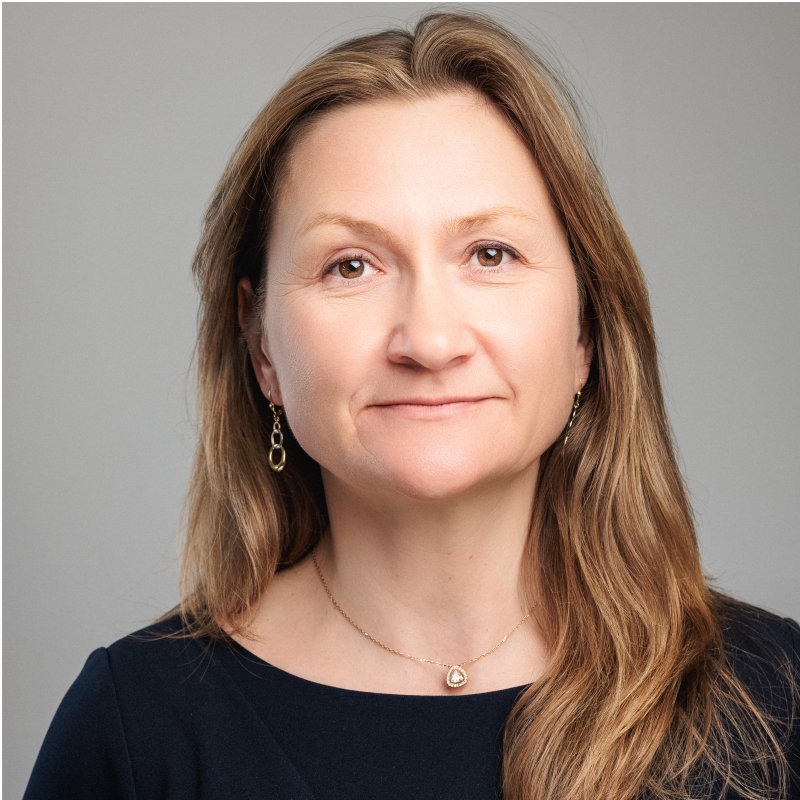
I've been working as a fractional CFO for over a decade. I've had engagements that lasted a few months and one relationship that's spanned ten years across an entire portfolio of companies.
So when people ask me whether the fractional model works, my answer is: it depends. Which I realise is unsatisfying, so let me be more specific.
The fractional CFO model is genuinely brilliant in certain situations. In others, it's the wrong answer, and a good fractional CFO should tell you that. The problem is that the model has become fashionable, particularly in the PE and VC world, and fashion tends to obscure nuance. Everyone is selling fractional. Not everyone is being honest about its limitations.
This is my honest assessment. I have a commercial interest in the model working, obviously. But I have a greater interest in being trusted, and trust requires candour.
First, let's define our terms
This matters because people use "fractional," "interim," and "consultant" interchangeably. They're not the same thing, and the differences affect what you get.
A fractional CFO works with you on an ongoing, part-time basis. Typically one to three days a week, over a period of months or years. They're embedded in your business. They attend board meetings, manage your finance team, own the numbers. They're your CFO, just not full-time. This is what I did at Quasar Group, where I've been the fractional CFO across their portfolio for ten years. I was not visiting. I was part of the furniture.
An interim CFO fills a full-time role for a defined period. Cover for maternity leave, bridging a gap between permanent hires, or leading a specific transformation programme. The engagement is full-time but temporary.
A consultant advises. They produce reports, make recommendations, and leave. They don't own outcomes. They don't manage your team. They don't sit in the Monday morning leadership meeting when the cash forecast has gone sideways.
The distinction matters because each model creates a different relationship with accountability. A fractional or interim CFO owns results. A consultant owns a deliverable. Know which one you're buying.
When the fractional model works brilliantly
I've seen it work extraordinarily well in five specific situations.
PE portfolio companies needing transformation. This is the highest-value use case I've encountered. A PE sponsor acquires a business, identifies that the finance function needs significant improvement, and brings in a fractional CFO to drive that transformation. The engagement might be two or three days a week for 12 to 18 months. The CFO builds reporting, fixes the close process, implements controls, develops the team, and prepares the business for the next stage of the hold period.
This works because the work is inherently project-shaped even if it doesn't feel like it. There's a defined starting condition (messy finance function), a defined end state (PE-grade reporting and controls), and a timeline driven by the investment thesis. You need someone senior enough to challenge the board and credible enough to retain the PE sponsor's confidence. That profile commands £400-600 per hour in the market, or £20-35K per month on retainer. Most mid-market businesses can't justify that cost full-time, but they absolutely need that capability.
During my decade at Quasar Group, I focused on delivering transformation that sticks across their high-tech portfolio. Tech ventures require a unique kind of financial rigor; I've stepped in to lead everything from foundational rebuilds to strategic exit prep and restructuring through volatile periods. By operating fractionally, I provided the company with the senior capability needed to handle high-tech challenges without having to carry the full-time cost of permanent CFO.
Scaling businesses between funding rounds. At GeoVS, I was the fractional CFO for a high-growth tech startup for several years. We built the finance function from nothing, secured over £2m in funding, and I ultimately led the company through to a successful sale. The founder needed CFO-level capability from day one but couldn't afford or attract a full-time CFO. The fractional model gave him exactly the right level of finance leadership at each stage of growth, scaling up as the business scaled up.
Post-acquisition integration. When a business has just been acquired, the first 100 days are critical. The finance function needs to be assessed, aligned to the new owner's reporting requirements, and often restructured. This is intense, skilled work with a natural end point. A fractional CFO can lead the integration, build the new reporting framework, and hand over to the permanent team once the structure is in place.
Exit preparation. The 12 to 18 months before a sale are when finance functions either prove their value or cost the seller millions in lost enterprise value. A fractional CFO who has been through multiple exits knows exactly what buyers look for in due diligence, what "good" looks like, and how to get there. This is bounded, high-stakes work that suits the model perfectly.
Companies that need senior capability but can't justify a full-time CFO. This is the most common scenario, and the most straightforward. A business turning over £5-30m needs genuine CFO capability for strategic decisions, board reporting, banking relationships, and investor management. But it doesn't need that capability five days a week. Two days gives them everything they need. The alternative is hiring a less experienced full-time FD at the same cost, and hoping they grow into the role. Sometimes that works. Often it doesn't. Matching the seniority of your finance capability to the decisions the business is actually making is the second of five steps to scaling a finance function, and it's the one founders most often get wrong in both directions.
When it doesn't work
Here's where I lose the sales pitch, and I'm fine with that.
When the business needs daily operational finance leadership with no end point. Some businesses are complex enough, or early enough in their finance maturity, that they need someone in the chair every day. Not for a transformation sprint, but permanently. If the accounts payable process requires daily senior intervention, if there are cash management decisions every morning that need CFO judgement, if the business simply cannot function without a finance leader present five days a week, then fractional is the wrong model. Hire someone full-time.
When there's no internal team to develop. My philosophy is simple: I build the machine, train your people, then leave. But that requires people to train. If a business has no finance team and no intention of hiring one, the fractional CFO becomes a permanent crutch rather than a catalyst. The whole point is to build capability that outlasts the engagement. If there's nobody to build capability into, you need a different solution.
When the business wants a name on the org chart but won't give authority. I've seen this more than once. A PE sponsor or VC investor insists on "getting a CFO in," the management team grudgingly agrees, and then the fractional CFO arrives to discover they have no budget authority, no access to the board, and no mandate to change anything. They're a comfort blanket for the investor, not a functional leader.
This fails every time. A fractional CFO needs the same authority as a full-time one.
The "fractional" part refers to time, not to influence. If the CEO won't give a fractional CFO authority over the finance function, they shouldn't hire one. They should fix the underlying trust issue first.
The trust question
Every prospective client asks some version of the same question: "If we bring you in, won't we just become dependent on you?"
It's a fair concern, and I take it seriously. The answer is: not if the engagement is structured correctly.
Dependency happens when the fractional CFO becomes a key-person risk. When knowledge lives in their head, when processes depend on their presence, when the team can't function without them. I've seen it happen with other fractional professionals, and it's a failure of the model as practised, not of the model itself.
The way I prevent it is straightforward. Everything I build gets documented. Every process I create gets an owner on the internal team. Every decision framework I develop gets taught to someone who will be there after I leave. I actively work to make myself redundant. That sounds counterintuitive for someone whose livelihood depends on ongoing engagements, but it's actually the best business strategy I know. Clients who trust you to build genuine capability and then step back are clients who recommend you to everyone they know. And they call you back when the next challenge arrives.
How to structure a fractional engagement for success
Most fractional engagements that fail do so because of poor scoping, not poor execution. Here's what I've learned about getting the structure right.
Start with a diagnostic. Before committing to an ongoing engagement, invest in a proper assessment. Two to three days, looking at the finance function, the team, the systems, the reporting, the controls. This tells both sides what the actual need is, which may be different from what the client thinks they need. I've done diagnostics that led to six-month engagements and diagnostics that ended with me saying "you don't need me, you need to hire a management accountant and fix your chart of accounts."
Define outcomes, not activities. "Two days a week of CFO support" is not a scope. "Board-ready management accounts within 10 business days of month end, a 13-week rolling cash flow forecast, and the finance team cross-trained to run the close independently" is a scope. Outcomes create accountability on both sides. Activities create time sheets.
Build in a handover plan from Day 1. The engagement should include explicit milestones for transferring knowledge and responsibility to the internal team. If the plan doesn't include "and then I leave" at some point, something is wrong. At GeoVS, the handover was built into the engagement from the start. By the time the company was sold, the finance function could have run without me. It just so happened that I was the right person to lead the exit process, so I stayed for that too.
Set a review cadence. Every three months, both sides should ask: is this still the right model? Has the need changed? Should we scale up, scale down, or stop? The best fractional relationships adapt over time. The worst ones persist on autopilot long after the original need has been met.
Get the authority question settled upfront. The fractional CFO needs a clear mandate. Who do they report to? What decisions can they make? Do they have a seat at the leadership table? Can they hire and manage the finance team? Sort this out before the engagement starts, not three months in when it becomes a problem.
The AI question
I'd be dishonest if I didn't mention this. The market for fractional CFOs is changing, and AI is a significant part of the reason.
Recent data shows that 79% of CFOs are increasing their AI budgets, but only 10% are confident in their underlying data quality. That gap is enormous, and it creates a specific kind of demand for senior finance operators who understand both the technology and the fundamentals. You can't automate a finance function that doesn't have clean data, documented processes, and proper controls.
AI applied to chaos produces confident-sounding chaos.
The most in-demand fractional CFO profile right now is what the market calls an "AI implementation overseer." Someone who can assess a finance function's readiness for automation, clean up the foundations, oversee the implementation, and ensure the technology actually delivers value rather than just generating impressive demos.
This is where the fractional model has a genuine structural advantage. A full-time CFO who's been in the same business for five years may not have the breadth of exposure to know which AI tools actually work and which are expensive disappointments. A fractional CFO who works across multiple businesses sees what's working in practice across different contexts. That pattern recognition is valuable, and it's inherent to the model.
My philosophy
The goal is always to make myself redundant. Build the finance function, develop the team, put the systems and processes in place, and leave behind something that works without me. The best measure of my success is that the business doesn't need me any more.
We're not trying to create permanent dependency. We're trying to create permanent capability.
That might sound like a strange thing for someone in my position to say. But the fractional CFOs who build long, successful careers are the ones who are honest about this.
The honest close
If you're reading this and thinking a fractional CFO might be the right answer for your business, here's my advice: find one who will tell you when you don't need them.
The best fractional CFOs will turn down work that doesn't fit the model. They'll tell you if you need a full-time hire instead. They'll build in their own obsolescence from Day 1. They'll measure success by what the business can do without them, not by how many days they can bill.
If the person you're talking to can't articulate when the engagement ends, or gets uncomfortable when you ask, that tells you something. The model works. But only when both sides are honest about what it's for.
If the fractional or interim model sounds like the right fit, the Services page explains how each engagement is structured and what it typically costs. If you're not sure which model applies to your situation, the Finance Diagnostic is a good first step — it establishes what the finance function actually needs before deciding how to resource it.